


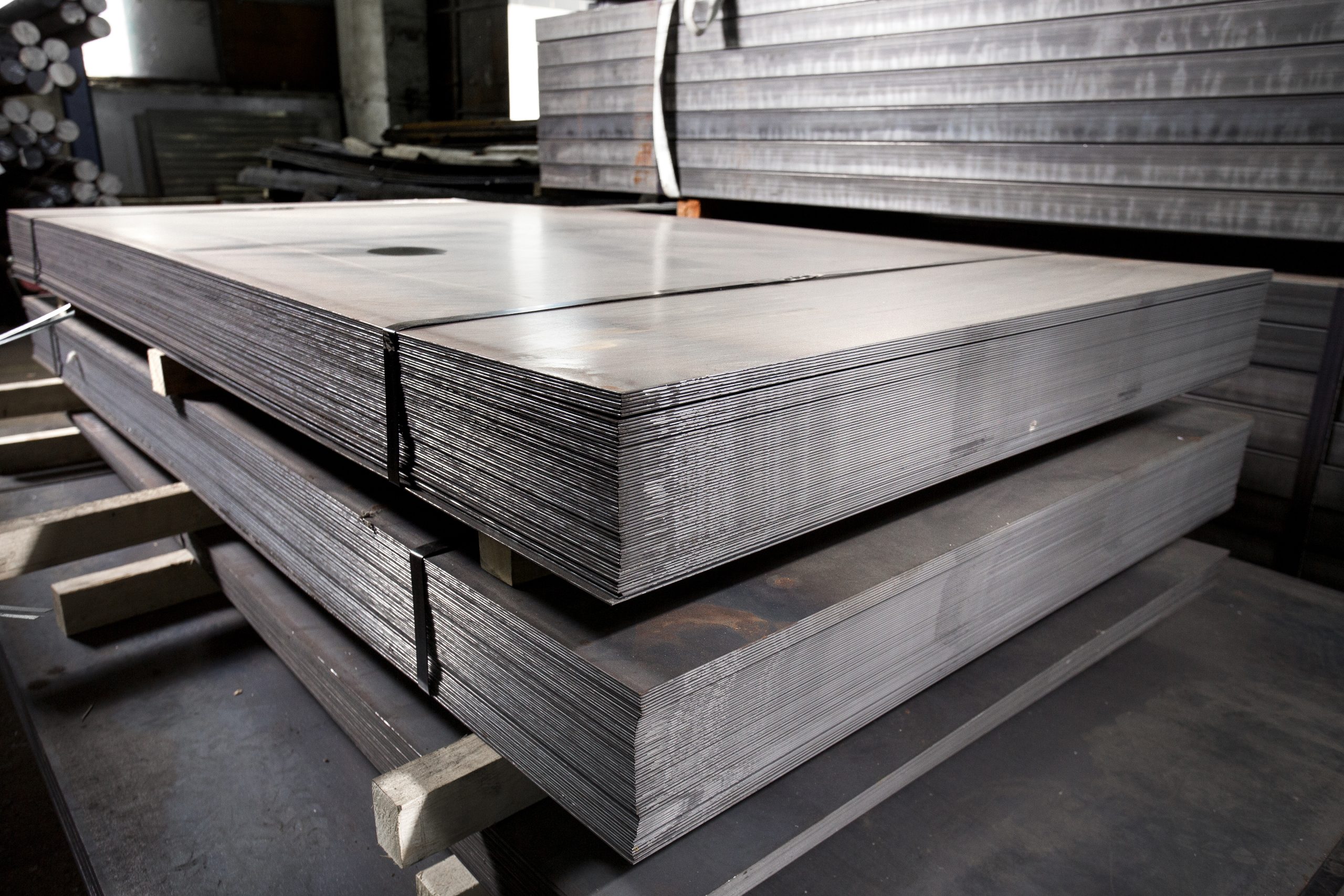
Metal sheets are material produced by pressing or rolling pieces of metal into metal thin plates. They are widely used in many different industries and applications due to their flexibility, durability and good electrical conductivity. So, how many metal sheets processing technologies are available today? What are the advantages and disadvantages of each type? Let’s learn with Kim Minh Tech about the comparison of different types of machining technology right in this article.
Laser Cutting – Modern metal sheets processing technology
Laser cutting is a method of cutting materials by directing the output of a high-power laser most commonly through optics. This is one of the most modern and popular metal sheets processing methods today.
The operation principle of laser cutting is based on the phenomenon of light radiation with high energy concentration properties. The laser beam is generally focused using a high-quality lens on the work zone. The focused beam has a direct impact on the focused spot size on the material. The energy of the laser increases the temperature at the focus point, causing melt or evaporation. By moving the laser in the desired cutting path, precise and sharp cuts can be made on the surface of the material.
Application of laser cutting technology
The application of laser cutting is typically used for industrial manufacturing applications in many different industries. Some of them can be specified:
Metal industry: Laser cutting is used to cut and process metals such as stainless steel, aluminum, copper, and other metal alloys to create parts and products.
Electronics industry: Laser cutting is used to process electronic circuit boards and electronic components such as microchips and chips.
Plastic and rubber industry: Laser cutting is used to cut and process plastic and rubber materials to create parts, products and models.
Woodworking manufacturing industry: Laser cutting is used to create complex wood products, models and decorations.
Advertising and Sign Board Making Industry: Laser cutting is used to create signs, braille, and other advertising products from materials such as mica, wood, plastic, and metal.
Advantages of laser cutting
Laser cutting is the most popular method on the market today because of its outstanding advantages. So what advantages does this method have over other technologies?
– High precision: Laser cutting allows precise and sharp details in complex shapes on the surface of the material.
– Speed: Laser cutting has a much faster cutting speed than other traditional methods, therefore increasing production productivity.
– Ability to cut complex shapes: The flexible and highly focused laser allows cutting complex and difficult shapes.
– Ability to cut a wide range of metals: Laser cutting can be used to cut a variety of metals such as stainless steel, aluminum, copper and metal alloys.
Disadvantages of laser cutting sheet metal processing technology
With that being said, this method also has some disadvantages as follows:
– High cost: Laser cutting machines and related technologies are expensive, requiring large investments.
– High power consumption: Laser cutting process consumes a lot of power, affecting energy efficiency.
– Potentially harmful to the environment: The laser cutting process can generate emissions and wastes that pollute the environment, requiring attention on handling and control.
Punching (punching) – Flexible sheet metal processing technology
Punching (punching) is a flexible sheet metal processing technology, used to create round or other shaped holes in the surface of sheet metal. This method is usually done by using a punching machine or a CNC machine with a specialized punching tool.
The operation principle of this method is to apply force to the metal surface to create holes or desired shapes. The tool is designed with the corresponding shape and size so that special shapes can be created. A punching machine or CNC machine controls the punching process to create holes in the sheet metal with the desired precision and sharpness.
Application of the method of punching (punching) sheet metal
The application of this method is very diverse. Here are some common applications of punching technology:
– Automotive industry: Punching is used to create holes and openings in automotive parts, including chassis, bodywork, and other parts.
– Electronics industry: Punching is used to make holes in electronic circuit boards and other electronic components.
– Timber manufacturing industry: Punching is used to make holes in wooden products, such as furniture and decorations.
– Machine building industry: Punching (punching) is used to create holes and openings in machine and equipment parts.
– Construction: Punching is used to make holes in building materials such as steel and aluminum, to assemble and connect parts.
Advantages of the method of punching (punching) sheet metal
This sheet metal processing technology has the ability to create holes or special shapes in sheet metal flexibly and easily. It also allows changing the size and shape of the hole according to specific technical requirements. Additionally, the breakthrough point of this type of technology is that it can be applied to many different metals.
Disadvantages of sheet metal processing technology
However, đục also has some disadvantages such as punching accuracy is often lower than laser cutting, and can cause opacity during the machining process. The speed of the punching (punching) process is also slower than Laser cutting, because it has to be done one by one. In addition, punching can create noise and vibration, causing discomfort and require additional measures to reduce noise when performing.
Folding bending – sustainable sheet metal processing technology
Folding is a durable sheet metal processing technology that is used to create bends in the surface of metal. This method is usually performed using a folding press and suitable bending tools.
The operating principle of folding bending is to use compressive force to bend the metal sheet to the desired bending angles. The sheet metal is placed into the folding press and actively clamped by the bending tool. The folding press applies compression to bend the sheet metal into the desired shape and bending angle. This process sẻver sharp and precise bends in metal.
Application of sustainable sheet metal processing technology – folding bending
– Folding bending technology has many applications in different industries. Here are some common applications of folding bending:
– Manufacturing industry: Folding presses are used to create bends on machine and equipment parts.
– Automotive industry: Folding bars are used to create curved contours on automotive parts such as doors, bodywork and other components.
Electronics industry: Folding presses are used to create bendable enclosures and circuit boards in the manufacture of electronic devices.
– Furniture industry: Folding is applied to create curved contours on wood products such as wooden furniture and decorations.
Advantages and disadvantages of folding bending technology
The advantages of folding bends include the ability to create a wide range of bend angles on sheet metal, from sharp to wide corners. In addition, the bending process helps the maintenance of the thickness and properties of the metal after bending, while saving raw materials and reducing machining costs.
However, folding also has some disadvantages. First, to produce different bend angles, it is necessary to have breakers that are suitable for the shape and size of the bend angle. In addition, in order to achieve accuracy, it is necessary to use a high-precision folding press and have an experienced technician to perform the folding bending process.
Bending – smooth sheet metal processing technology
Bending is a sheet metal processing technology used to smoothly create curved shapes on the surface of metal. On sheet metal, the curves can be circular or free-curved shapes, depending on the design requirements. Bending creates curves in the sheet metal without causing much breakage, cracking or deformation.
The operating principle is based on the use of force applied from the bending machine to bend the metal sheet to the desired shape. The sheet metal is placed in the bending machine and actively clamped by the bending die. The bending machine will apply bending force to soften the metal and create a curve in the surface.
So, how is bending technology applied in industry?
In the machinery industry, it is used to create curved shaped parts on equipment and machines. In the electronics industry, bending is applied to create curved shaped enclosures and circuit boards for electronic devices. In the automotive industry, bending is used to create curved-shaped components on interior and trim parts. Even in the construction industry, bending is also used to create metal products with curved shapes, such as doors and railings.
Advantages and disadvantages of sheet metal bending technology
Advantages of bending technology include the ability to produce diverse curved shapes, from circular to free-curving on sheet metal. In addition, the bending process also smooths the surface of the metal, creating products with great appeal. It also has the bending ability used for a wide variety of highly stretchable metals.
However, bending also comes with some disadvantages. First, a properly sized bending machine is required to meet the special bending requirements. Second, high-quality bending molds are required to ensure the accuracy and durability of the bending curves. Finally, after the bending process, a quality check should be performed to ensure that the product meets the technical and appealing requirements.
Comparison of sheet metal processing technologies
For better understanding of the advantages and disadvantages of each sheet metal processing technology, here is a table of comparison between each processing technologies (rated based on ideal conditions). The table is for reference only, and which technology to apply when processing sheet metal depends on actual conditions and specific applications.
| Công nghệ | Độ chính xác | Tốc độ | Chi phí | Độ an toàn | Thân thiện với môi trường |
| Cắt laser | Cao | Nhanh | Cao | An toàn | Thân thiện |
| Đột (đục) | Thấp | Chậm | Trung bình | An toàn | Thân thiện |
| Chấn gấp | Trung bình | Nhanh | Trung bình | An toàn | Thân thiện |
| Uốn | Trung bình | Trung bình | Trung bình | An toàn | Thân thiện |

Hopefully, through the content of the above article, you have better understand the technologies of sheet metal processing . Understand the advantages and disadvantages of each type of technology and make the right choice for yourself. If you are looking for a reputable sheet metal processing unit, please contact Kim Minh Tech immediately via website: https://kimminhtech.com/ for assistance in choosing the right processing technology, Super cost-effective processing package consulting with best warranty.

