


Large sheet metal fabrication is the process of producing flat and uniform surfaces by removing deviations and irregularities on the surface of large metal sheets. This process is commonly used in industries such as machinery manufacturing, medical equipment production, electronic device manufacturing, and other applications related to large metal sheets. To carry out the fabrication, the executing unit must be a reputable and experienced business to ensure high precision.
Introduction to large sheet metal fabrication
Firstly, to understand what large sheet metal fabrication is, it’s important to have a clear understanding of sheet metal in mechanical engineering. So, what is a large sheet metal?
Definition of large sheet metal:
A large sheet metal is a piece of metal with large dimensions and a flat surface used for fabrication and production of various metal products. The size of a large sheet metal is typically larger than that of regular metal pieces and can be manufactured from different types of metals such as steel, aluminum, copper, titanium, and various other metals. Large sheet metal can be used to manufacture machine components, parts for medical equipment, parts for cars and airplanes, components for electronic devices, and many other applications.

Commonly used metals in large sheet metal fabrication:
The commonly used metals in large sheet metal fabrication include:
Steel:
Steel is the most widely used metal in large sheet metal fabrication. It has high hardness, strength, and good load-bearing capacity, making it extensively used in industries such as machinery manufacturing, shipbuilding, and medical equipment production.
Aluminum:
Aluminum is a lightweight metal with high ductility and good strength. It is widely used in the production of products such as household appliances, electronic devices, and aesthetically appealing products.
Copper:
Copper is a malleable metal with excellent electrical conductivity, making it suitable for the production of electronic products and medical devices.
Titanium:
Titanium is a lightweight metal with high strength. It is used in the production of medical products, aircraft, and high-end watches.
Stainless Steel:
Stainless steel has high strength and good corrosion resistance, making it suitable for the production of medical products and in the food industry.
Zinc:
Zinc is an inexpensive metal with good corrosion resistance. It is widely used in the production of galvanized products and in the construction industry.
Other metals such as bronze, nickel, magnesium, and alloys are also used in large sheet metal fabrication depending on the technical requirements and applications of the final product.
Standards for the size and thickness of large sheet blanks

Standards for the size and thickness of large sheet blanks may vary depending on each country and the industry using them. However, in mechanical processing and machine manufacturing, the standards for the size and thickness of large sheet blanks are often as follows:
Regarding the size of large sheet blanks
The size of large sheet blanks is typically determined by length, width, and thickness. The most common sizes are 1220mm x 2440mm and 1500mm x 3000mm. However, different sizes can also be produced depending on customer requirements.
Regarding the thickness of large sheet blanks
The thickness of large sheet blanks is usually measured in meters or inches. The common thickness range for large sheet blanks is from 1mm to 100mm. However, different thicknesses can also be produced depending on customer requirements.
The standards for the size and thickness of large sheet blanks are established to ensure that the processed products from the large sheet blanks meet the technical requirements and mechanical properties of the final products.
Applications of large sheet blank processing in the mechanical industry
Large sheet blanks are used for processing machine parts, mechanical components, welding structures, manufacturing components and equipment in heavy industries, and other applications. Here are some applications of large sheet blank processing in the mechanical industry:
Production and processing of mechanical parts
Large sheet blanks are used to manufacture and process mechanical parts such as gears, shafts, gearboxes, valves, drive components, brake assemblies, windows, nozzles, and many other products.
Production of welding structures
Large sheet blanks are used to produce welding structures, including frames, canopies, storage tanks, and other outdoor structures.
Production of equipment in heavy industries
Large sheet blanks are used to manufacture equipment in heavy industries such as storage tanks, fuel tanks, toilets, pipelines, and many other products.
Production of components and packaging equipment
Large sheet blanks are used to produce components and packaging equipment, including packaging sheets, casting molds, pressing molds, and other products.
Production of custom products
Large sheet blanks are also used to manufacture custom products for customers, including control panels, shelves, electrical cabinets, art products, and many other products.
In summary, large sheet blank processing is a common manufacturing and fabrication method in the mechanical industry, used to produce and process machine parts, mechanical components, welding structures, manufacture components and equipment in heavy industries, and other applications.
Techniques for large sheet blank processing
Techniques for large sheet blank processing include cutting, bending, punching, welding, sandblasting, painting, and protective coating. Currently, there are many techniques for large sheet blank processing that have been developed and continuously improved. One of the most advanced techniques for large sheet blank processing today is CNC machining.
Overview of CNC machining for large sheet blanks
CNC machining for large sheet blanks is a technique that uses CNC machines to process and fabricate mechanical parts from large sheet blanks. CNC machines can be programmed to cut, bend, punch, weld, sandblast, paint, and apply protective coatings on large sheet blanks.
The CNC machining process for large sheet blanks begins with programming the CNC machine to perform the necessary machining tasks. Then, the large sheet blank is placed on the machining table, and the CNC machine is started to carry out the machining tasks according to the pre-programmed instructions.
CNC machining for large sheet blanks offers many advantages, including high precision, fast machining speed, and the ability to produce complex-shaped and sized mechanical parts. This makes CNC machining for large sheet blanks widely used in various mechanical fields, such as manufacturing machine parts, industrial equipment, and custom products.

Steps for CNC machining of large sheet blanks
The steps to carry out large sheet CNC machining are as follows:
- Design and programming: Initially, mechanical engineers or technicians will design the component to be machined and create a 3D model. Then, they will program the CNC machine using CAD/CAM software to control the machining process.
- Prepare the sheet blank: A large sheet blank is selected and prepared for use in the machining process. The sheet is cut to the desired size and shape and placed on the machining table.
- Set up the CNC machine: The CNC machine is set up and configured for the specific task, including selecting the machining tools and establishing the accuracy level.
- Machining: The CNC machine is started to perform the programmed machining tasks, including cutting, bending, drilling, welding, sandblasting, painting, and applying protective coatings.
- Inspection and finishing: After the machining process is completed, the mechanical component is inspected to ensure accuracy and meet the required quality standards. Subsequently, the component can be finished by grinding, polishing, and applying a protective layer.
- Packaging and transportation: Finally, the mechanical component is packaged and transported to the intended destination.
Machining cutting, bending, and stamping of large sheet blanks
Machining cutting, bending, and stamping of large sheet blanks are common machining techniques in the mechanical engineering industry, especially for large sheet blank machining. The steps involved in these techniques are as follows:
- Prepare the sheet blank: The large sheet blank is prepared and cut to the desired size and shape.
- Set up the machinery: The cutting machine, bending machine, or stamping machine is set up and configured for the specific task, including selecting the machining tools and establishing the accuracy level.
- Cutting: The cutting machine is used to cut the sheet blank to the desired size and shape. Various types of cutting machines can employ cutting wheels or lasers to perform the cutting process.
- Bending: The bending machine is used to bend the sheet blank into complex shapes, such as curves, hemispheres, or ellipses. The bending machine typically utilizes bending force to shape the sheet blank into the desired forms.
- Stamping: The stamping machine is used to stamp the sheet blank into various shapes. Stamping machines can utilize molds to create intricate shapes or apply force to punch holes or join metal components together.
- Inspection and finishing: After the machining process is completed, the mechanical component is inspected to ensure accuracy and meet the required quality standards. Subsequently, the component can be finished by grinding, polishing, and applying a protective layer.
Cutting, bending, and stamping of large sheet blanks
Cutting, bending, and stamping of large sheet blanks can be performed using various techniques in the mechanical engineering field, especially in the machining of large sheet blanks. The implementation steps for these techniques are as follows:
- Preparation of sheet blanks: Large sheet blanks are prepared and cut to the desired size and shape.
- Machine setup: Cutting machines, bending machines, or stamping machines are set up and configured for specific tasks, including the selection of machining tools and accuracy settings.
- Cutting: Cutting machines are used to cut sheet blanks into the desired size and shape. Cutting methods can include plasma cutting, laser cutting, oxy-gas cutting, vertical saw cutting, and roll forming.
- Bending: Bending machines are used to bend sheet blanks into complex shapes such as curves, hemispheres, or ellipses. Bending machines often utilize bending force to shape the sheet blanks as desired.
- Stamping: Stamping machines are used to stamp sheet blanks into various shapes. Stamping methods can involve the use of dies to create intricate shapes or the application of force to punch holes or join metal components.
- Inspection and finishing: After the machining process is complete, the mechanical parts are inspected to ensure accuracy and meet quality requirements. The parts can then be finished through processes such as grinding, polishing, and protective coating.
These techniques are employed to produce metal components with complex shapes, large sizes, and high precision. They find applications in various industries, including machinery manufacturing, automotive industry, shipbuilding, and renewable energy.
Machinery and equipment used
To carry out the machining of large sheet blanks, manufacturers and mechanical plants utilize a range of different machines and equipment, including:
- Plasma cutting machine: Plasma cutting machines are used to cut metal sheets by utilizing a plasma flame to cut and remove metal from the material.
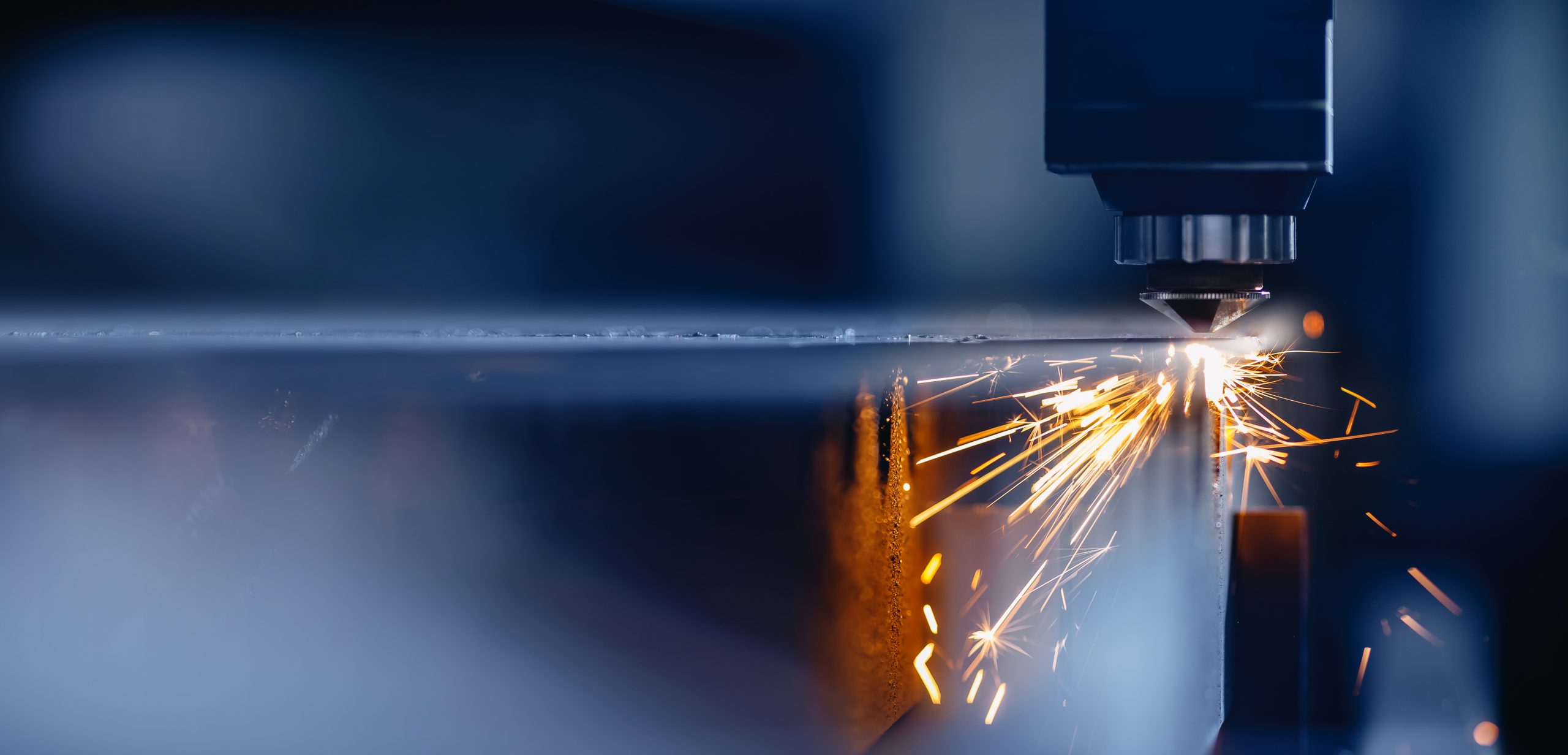
- Laser cutting machine: Laser cutting machines employ a strong laser beam to cut through metal sheets.
- Oxy-gas cutting machine: Oxy-gas cutting machines use a mixture of oxygen and gas to cut and remove metal from the material.
- Sheet bending machine: Sheet bending machines are used to bend metal sheets into various shapes and angles.
- Tube bending machine: Tube bending machines are used to bend metal tubes into different shapes.
- Mechanical press machine: Mechanical press machines utilize a casting mold and pressing force to create metal parts with complex shapes.
- Hydraulic press machine: Hydraulic press machines use hydraulic force to create metal parts with complex shapes.
- Excenter press machine: Excenter press machines employ the striking force of an excenter wheel to create metal parts.
- Roll forming machine: Roll forming machines are used to cut and bend metal sheets into different shapes.
These devices are integrated with CNC (Computer Numerical Control) technology to perform machining operations with high accuracy and efficiency.
The most common types of large sheet blanks in the market today
There are various types of large sheet blanks commonly used in metal production on the market today, including hot-rolled steel sheets, cold-rolled steel sheets, alloy steel sheets, stainless steel sheets, and more. Here is some information about these commonly used types of large sheet blanks.
What is hot-rolled steel sheet? Characteristics and applications
Hot-rolled steel sheet is a type of steel sheet produced through the hot rolling process, where the steel sheet is passed through hot rollers to reduce thickness and shape it into the final product. The hot rolling process creates steel sheets with large thickness and good load-bearing capacity. Hot-rolled steel sheets have stable thickness and hardness, as well as sufficient flexibility for easy fabrication into various metal products.
Processing techniques for hot-rolled steel sheet
The processing techniques for hot-rolled steel sheet include cutting, bending, punching, and sheet welding. The processing of hot-rolled steel sheets requires precise and high-accuracy machinery and equipment to ensure the quality of the final products. The main machines used for processing hot-rolled steel sheets include plasma cutting machines, bending machines, punching machines, welding machines, and grinding machines.
Large stainless steel sheet – Characteristics, applications, and processing techniques
Large stainless steel sheet is a corrosion-resistant metal product manufactured from stainless steel, with large dimensions and a thickness of 3mm and above. Stainless steel is produced by alloying iron with elements such as chromium, nickel, and molybdenum to create a corrosion-resistant, erosion-resistant alloy.
Large stainless steel sheets have high durability, excellent corrosion resistance, and good heat resistance. They also exhibit resistance to chemicals, high polishability, antibacterial properties, and easy maintenance. They are widely used in various industries, including medical equipment manufacturing, shipbuilding, electrical and electronic equipment manufacturing, machinery and equipment manufacturing in the food and beverage industry, architectural and interior decoration, and many other applications. Large stainless steel sheets are also used to produce kitchen cabinets, sinks, faucets, doors, decorative products, and various other applications.
Processing of large stainless steel sheets is often carried out through plasma cutting, laser cutting, or oxyacetylene cutting to create patterns and shape the dimensions. Subsequently, techniques such as bending, stamping, welding, grinding, and polishing are applied to complete the final products. Additionally, other processing techniques such as drilling, milling, turning, and brushing are used to create unique details or surface finishes for large stainless steel sheets. The processing equipment used includes plasma cutting machines, laser cutting machines, bending machines, stamping machines, grinding machines, and welding machines.
Large copper sheet – Characteristics, applications, and processing techniques
Large copper sheet is a metal product produced from copper, with large dimensions and a thickness of 3mm and above. Large copper sheets have good thermal and electrical conductivity, corrosion resistance, easy formability and stamping, excellent processability, high strength, and aesthetic appeal.
They are widely used in various industries, including medical equipment manufacturing, electronics manufacturing, machinery and equipment manufacturing in the food and beverage industry, marine and aerospace manufacturing, architectural and interior decoration, and many other applications.
To process large copper sheets, various techniques such as cutting, bending, stamping, and CNC machining can be used. However, copper sheets have high malleability and require special handling to prevent warping during processing. The processing techniques for large copper sheets include the use of plasma cutting machines, laser cutting machines, bending machines, stamping machines, and CNC machining to produce a variety of large copper products with different sizes and shapes, such as decorative copper sheets, doors, sinks, faucets, and other products.
Benefits and Potential of Large Plate Machining
Large plate machining offers numerous benefits for businesses and specific advantages for customers, including:
Optimized production costs:
Using large plates optimizes the production process, reducing time, effort, labor costs, equipment costs, and material costs compared to manufacturing individual components separately.
Ensured product quality:
Large plate machining minimizes deviations and defects during the machining process, ensuring product quality and enhancing consistency in production.
Increased productivity:
With the support of modern machining equipment, large plate machining enhances production efficiency and reduces the time required to complete orders.
Enhanced flexibility:
Large plate machining allows businesses to manufacture products with various sizes and shapes, meeting customer demands and requirements.
Minimized waste:
The use of large plates reduces waste and the production of substandard products, ensuring environmental safety and human health.
Improved aesthetics:
Large plate machining enables the production of aesthetically pleasing products that meet market and customer demands.
Large plate machining is increasingly being widely utilized across various industries due to its ability to process large-sized products with high precision. In the future, the potential of large plate machining will continue to be explored and developed, particularly in industries that require high accuracy and durability, such as the aerospace, shipbuilding, renewable energy, and automotive industries. The technology of large plate machining will continue to be improved and advanced to meet the increasingly diverse and complex market demands in the future.
Kim Minh Tech – A reputable and experienced large plate CNC machining service provider
Kim Minh Tech is a trusted and long-standing provider of large plate machining services. With a team of professional engineers and technicians, we are committed to delivering high-quality large plate products that meet technical requirements and satisfy customer needs.
We offer machining services for various types of large plates, including hot-rolled steel plates, large stainless steel plates, large copper plates, and other types of metals. Our company is equipped with state-of-the-art machinery and equipment to ensure fast and accurate machining processes.
Customers can request the production of large plate products according to their specific requirements, and Kim Minh Tech will perform the machining precisely to meet the desired purpose of use.
We guarantee competitive pricing and excellent after-sales service for our customers. Customers can have confidence in using our large plate products as they are always assured of quality and backed by a warranty.
We hope that through this article, you have gained a better understanding of large plate machining, its application methods, and how to utilize it effectively in daily life. Please feel free to contact Kim Minh Tech if you need customized large plate machining or have any related inquiries.

